A tutoring company rewrites its ads around the student's worry
Sinotif · Seen Nov 17, 2026
Sinotif · Facebook ad
Speak to the exact worry of the exact person, and count the leads that are real, not the ones that are cheap.
We link to this one instead of showing a screenshot. See it at the source.
See the original sourcewhatsappbusiness.com
What they did
Sinotif is a tutoring provider in Indonesia. Its ads that open a WhatsApp chat were getting cheap conversations, but many people sent one message and went silent. It decided the ads were the problem: heavy with text and all about the company. With its agency it rebuilt them around specific worries, such as a student in ninth or twelfth grade facing national tests, told as stories people could relate to. It also stopped counting raw messages and counted only people who stayed in the chat or filled in a short form. Comparing January to June 2026 with the same months of 2025, Meta's case study reports 16% more good leads on 32% less ad spend.
Why it works
Speak to the exact worry of the exact person, and count the leads that are real, not the ones that are cheap.
Problem first. Name the problem clearly and the product explains itself.
How to copy it
- Look at your current ads. If they mostly talk about you, start again.
- Name one customer and one worry, as specific as a school year and an exam.
- Tell it as a short story the reader sees themselves in.
- Decide what a good lead is for you, such as someone who replies twice or books a call.
- Judge your ads on the cost of a good lead, even if the cost per message goes up.
Fill in the blank template
[Specific person] has [specific worry] in [time frame]. Here is how [your service] helps: [one line]. Message us to start.
Use this with AI
Fill in the three blanks, then paste this into ChatGPT, Claude or the AI tool you use. You get a first draft of this idea for your own brand.
Help me write marketing for my brand, using an idea from a real campaign.

THE IDEA (from Sinotif)
Principle: Speak to the exact worry of the exact person, and count the leads that are real, not the ones that are cheap.
What they did: Sinotif is a tutoring provider in Indonesia. Its ads that open a WhatsApp chat were getting cheap conversations, but many people sent one message and went silent. It decided the ads were the problem: heavy with text and all about the company. With its agency it rebuilt them around specific worries, such as a student in ninth or twelfth grade facing national tests, told as stories people could relate to. It also stopped counting raw messages and counted only people who stayed in the chat or filled in a short form. Comparing January to June 2026 with the same months of 2025, Meta's case study reports 16% more good leads on 32% less ad spend.

STEPS TO COPY IT
1. Look at your current ads. If they mostly talk about you, start again.
2. Name one customer and one worry, as specific as a school year and an exam.
3. Tell it as a short story the reader sees themselves in.
4. Decide what a good lead is for you, such as someone who replies twice or books a call.
5. Judge your ads on the cost of a good lead, even if the cost per message goes up.

TEMPLATE
[Specific person] has [specific worry] in [time frame]. Here is how [your service] helps: [one line]. Message us to start.

ABOUT ME
My brand and what I sell: [fill this in]
Who I sell to: [fill this in]
What I want people to do: [fill this in]

YOUR TASK
Write 3 versions of this idea for my brand, using the template. Use my facts and my words, not the ones from Sinotif. Do not copy their text or invent numbers, prices or results. Match how my customers talk. If something important is missing, ask me before you write.
Nix's take

Nix
Marketer since 2009. Teaches AI marketing.
Two lessons in one. Their old ads talked about the company, and the new ones talk about a ninth grader's exam. Then they stopped counting cheap messages and counted real leads. It costs more per message, but less per actual customer.
More examples of problem first
See all problem first examples

Answer the question your customers are scared to ask
Taxumo · Problem first
Street ads that only appear when it rains
Cebu Pacific · Problem first
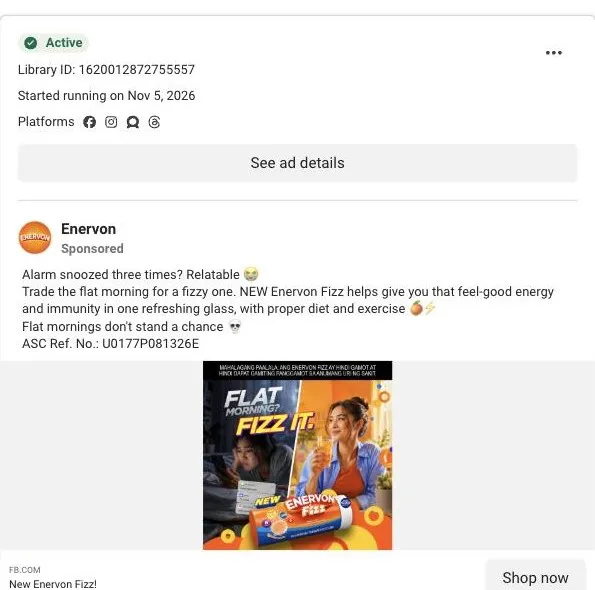
Start with a morning your customer knows too well
Enervon · Problem first
More from Facebook ad
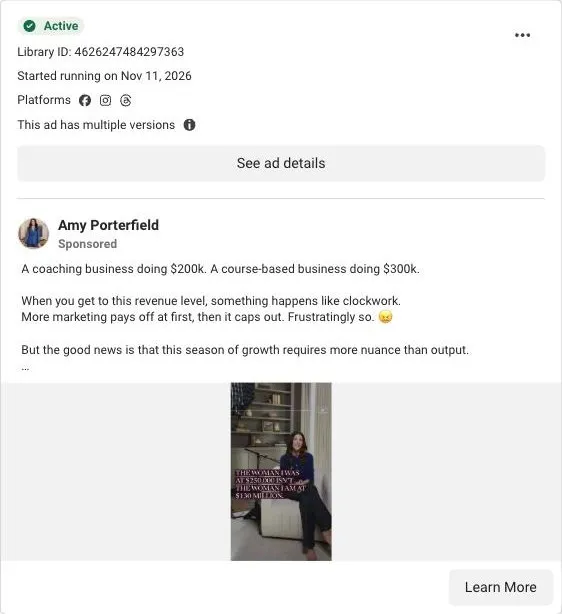
Open the ad with your buyer's exact revenue
Amy Porterfield · Specificity
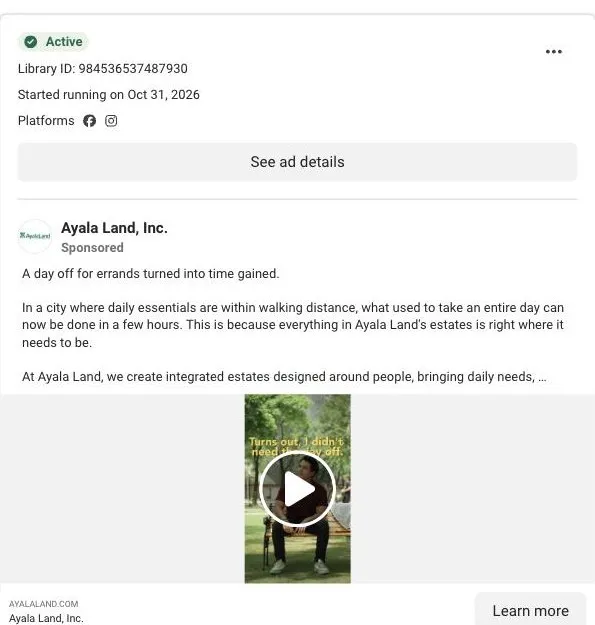
Sell the place through one small story about time
Ayala Land · Storytelling
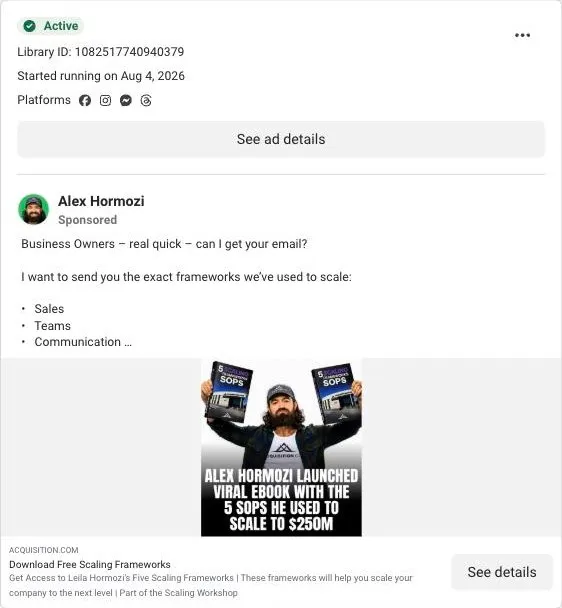
Ask for the email in the first line
Alex Hormozi · Simplicity